

Russian Speaking Psychologistyou should not have to explain yourself in a second language
At our practice you can work with Svitlana Özen, a clinical psychologist for whom Russian and Ukrainian are both native languages. Sessions are held online, from anywhere in Turkey, 7 days a week between 09:00 and 22:00.
Write in Russian, Ukrainian or English and we reply with a session time; usually within 24 hours. Sessions in Russian and Ukrainian are online only.
2
native languages
Russian and Ukrainian · nothing translated
Online
anywhere in Turkey
secure video · sessions not recorded
Couples
Turkish-Russian
a distinct strand of the practice
5.0
Google rating
49 on Google · 200 published
BPS
Berk Mete · Graduate Member
GMBPsS #763717
Experience
3,000+ sessions
Adults · couples · children
Rating
5.0 on Google
49 reviews · 200 published
Response
Within 24 hours
First enquiry
Therapy works in the language you think in
You can do therapy in a second language, and plenty of people do. But part of the work then goes into translation: you hunt for a word instead of staying with the feeling. In your own language that barrier is simply not there.
Precision instead of approximation
In a second language feelings get named roughly. Therapy runs on the exact shade: not “bad”, but ashamed, empty, frightened or slighted.
No effort spent translating
Attention that goes into finding the word is attention taken from the work itself. In your own language you start at the point that matters.
Access to early memory
Childhood experience is stored in the language it was lived in. That is exactly why the first language carries so much weight in trauma work.
Irony, idiom, tone of voice
Humour and half-tones barely survive translation. In your own language you stay yourself rather than a simplified version of yourself.
Who holds the sessions in Russian and Ukrainian
One strand, one psychologist: so you know exactly who you will be working with before you write.
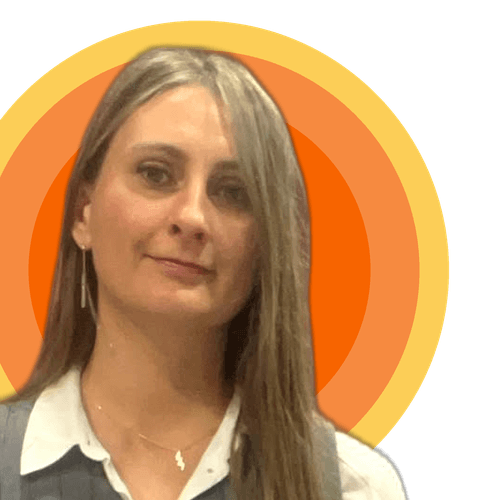
Svitlana Özen
Clinical psychologist · Russian and Ukrainian as native languages
Works with anxiety, traumatic experience and PTSD, obsessive-compulsive difficulties, low mood, eating-related difficulties and enduring personality patterns. Her distinct area is couples who do not share a first language, most often Turkish-Russian couples. She works online only, from Istanbul, and does not see children.
What you can bring to these sessions
Anxiety and panic
Constant worry, physical tension, panic attacks with bodily symptoms, and trouble sleeping.
Trauma and PTSD
Difficult experience that still shapes the present: intrusive memories, avoidance, a sense of never being safe.
Obsessions and compulsions
Intrusive thoughts and repeated actions that keep taking more time and more energy.
Low mood
Flatness, loss of interest, no energy left, including after relocation and life far from the people you grew up with.
Eating-related difficulties
The relationship with food and with your own body: control, bingeing, constant counting, shame about how you look.
Enduring personality patterns
The same scenarios repeating in relationships and in self-image, unchanged by a change of city or partner.
Children and adolescents are seen by other psychologists of the practice, and those sessions run in Turkish.
Couples who do not share a first language
In Turkish-Russian couples the argument is often not only about the subject; it is about the language it is held in. One partner speaks their own and sounds certain. The other is working in a second language, comes out harsher or softer than they meant, and gets understood inexactly. Over the years that hardens into its own grievance: I am never really heard.
When the psychologist holds both languages, that tilt goes away. Nobody has to translate themselves, and nobody is put in the weaker position by vocabulary. The work stays on the relationship rather than on who found the better word. This is one of Svitlana Özen's core areas, and it also covers the case where one partner speaks English and the other Russian.
How to start: four steps
- 1
Message us on WhatsApp
any languageA few lines on what you would like to work on, and which language suits you better: Russian, Ukrainian or English.
- 2
We reply with a session time
in writingWe answer with a concrete time for the first session. There is no separate phone interview beforehand.
- 3
First meeting
50 minAn assessment session: your history, what brought you here, and your goals. You leave it knowing how the work will be structured.
- 4
Regular sessions
weeklyFrom there, usually once a week over a secure video connection, with progress tracked on standardised clinical measures.
How do you find a Russian-speaking psychologist in Turkey?
The two things worth checking are whether Russian is the psychologist's native or learned language, and in what format the sessions actually happen. At Mete Psikoloji, sessions in Russian and Ukrainian are held by Svitlana Özen, a clinical psychologist for whom both languages are native and who also speaks advanced Turkish and English. Her sessions are online only, run from Istanbul over a secure video connection, so you can join from Antalya, Istanbul, Alanya, Mersin or outside Turkey. She works with anxiety and panic, traumatic experience and PTSD, obsessive-compulsive difficulties, low mood, eating-related difficulties and enduring personality patterns, and her distinct area is couples who do not share a first language, most often Turkish-Russian couples. To book, send one WhatsApp message in Russian, Ukrainian or English: we reply with a session time, and there is no phone interview first. In-person appointments at the Antalya office are with the psychologists who work in Turkish and English; child and adolescent sessions are held by other psychologists of the practice and run in Turkish.
Therapy in Russian: the usual questions
What language will my sessions be in?
Russian or Ukrainian, whichever you prefer. Both are native languages for Svitlana Özen, clinical psychologist, so nothing is interpreted or translated. She also speaks advanced Turkish and English. Sessions with her are held online only. Turkish and English sessions are held by the other psychologists of the practice, in person in Antalya or online.
Why does therapy in your first language matter?
Because therapy works on nuance. Shame, anger, grief, guilt: in a second language these states usually get named approximately, and precision is the actual working tool. In your first language you spend no effort on translation and you do not quietly simplify what you meant to say. The difference is sharpest in work on childhood and trauma, where the words that matter tend to arrive in the first language.
Can the sessions be in Ukrainian?
Yes. Ukrainian is also a native language for Svitlana Özen and a whole process can run in it. You choose the language when you first get in touch on WhatsApp: just tell us which language you are more comfortable in, and that is the language of the work.
Are Russian-language sessions online or in person?
Online only. Svitlana Özen works from Istanbul over a secure video connection, so you can join from anywhere in Turkey or from abroad. Sessions in Russian and Ukrainian are not held at the Antalya office: in-person appointments there are with the psychologists who work in Turkish and English.
How do I book, and how long will a reply take?
Message us on WhatsApp in Russian, Ukrainian or English and we reply with a session time directly. There is no separate phone interview before the work starts, and we do not call you unannounced. We usually reply within 24 hours, often much sooner. If you would rather write everything out, you can send the intake form on the site instead.
What does she work with?
Anxiety and panic, traumatic experience and PTSD, obsessive-compulsive difficulties, low mood, eating-related difficulties, and enduring personality patterns. Her distinct area is cross-cultural couples work, most often Turkish-Russian couples. She does not work with children: child and adolescent sessions are held by other psychologists of the practice and run in Turkish.
My partner speaks Russian and I do not. Can I arrange this for us?
Yes, and it happens often. Write to us in English on WhatsApp with a short description of the situation, and we will reply with a session time. For couples work, sessions can be held in Russian, in English, or moving between them, depending on what the two of you can both follow. Nobody has to argue their side in their weaker language.
Will everything stay confidential?
Yes. What you say is protected by professional ethics and by Turkish data protection law (KVKK). The practice works within the code of ethics of the British Psychological Society; sessions are not recorded, and nothing is shared with third parties except in the narrow circumstances required by law.
Last updated: September 2026 · Content reviewed by Berk Mete, MSc, GMBPsS · More answers on our FAQ page
Write in the language you think in
One message is enough: a few lines on what you would like to work on, and we reply with a session time. Russian, Ukrainian or English, 7 days a week between 09:00 and 22:00.
Russian-language strand: related pages
Psychologist
Svitlana Özen
Clinical psychologist · Russian and Ukrainian as native languages · online only.
Guide
Психолог на русском языке
The same page in Russian, if that is the easier language to read in.
Service
Couples Therapy
Including couples who do not share a first language.
Service
Online Therapy in Turkey
The same clinical frame wherever in the country you are.
Service
Anxiety Treatment
Evidence-based work on worry, panic and avoidance.
Approach
Schema Therapy
Deeper work on the life patterns that keep repeating.
Guide
How It Works
From the first message to a steady weekly rhythm.
Psychologist
Berk Mete, MSc, GMBPsS
Founding clinical psychologist · Birkbeck, University of London.