

Individual Therapy in Englishstructured, measured, and fully in your language
One-to-one CBT and Schema Therapy at a practice led by a London-trained, BPS-member psychologist (MSc Health and Clinical Psychological Sciences). For expats, professionals and students in Antalya — in person in Şirinyalı or online, 7 days a week, 09:00-22:00.
Write or call to arrange a first appointment — we usually reply within 24 hours, in English.
5.0
Google rating
49 on Google · 200 published
3,000+
sessions of experience
adults · couples · children
Board
matching by case board
not an algorithm — a clinical board
BPS
Berk Mete — GMBPsS
Birkbeck, Univ. of London · #763717
Which area do you need?
BPS
Berk Mete — Graduate Member
GMBPsS #763717
Experience
3,000+ sessions
Adults · couples · children
Rating
5.0 on Google
49 reviews · 200 published
Response
Within 24 hours
First appointment
Does This Sound Like You?
Most people who reach out arrive with one of these thoughts. If one of them fits, you are not alone — and it is enough of a reason to start.
You feel anxious much of the time but cannot quite name the reason.
You loop through the same thoughts again and again, and you are tired of it.
Your motivation has dropped and you no longer enjoy things, but cannot say why.
In relationships you either give too much or withdraw completely.
You keep telling yourself "I should be fine", and it only wears you down further.
Something from the past still affects you, and you want to be free of it.
A Way Back to Being on Your Own Side
Individual therapy is a structured process in which a clinical psychologist helps you understand and reshape your own patterns of thought, feeling and behaviour. It is not designed to hand out advice or tell you what to do — it is designed to help you understand yourself better and find your own answers.
At Mete Psikoloji it is delivered with evidence-based approaches — CBT, ACT and Schema Therapy — integrated around your needs. The effectiveness of these methods rests on decades of research.
The work is personal. Depression, anxiety, trauma, relationships or a search for meaning — whatever it is, the process moves at your pace. Meaningful change is often seen across 12-20 sessions, but the length is agreed together and reviewed regularly.
Understand your thought patterns
The automatic thoughts, beliefs and cognitive distortions that press on you become visible in therapy — and start to change.
Regulate your emotions
Learning to recognise, accept and process intense feelings healthily improves daily life directly.
Build lasting change
Not short-term relief but long-term resilience. What you gain in therapy keeps working outside the room.
Find a safe space
A relationship where you feel only heard and understood, never judged, is the foundation of change.
What We Work On
Anxiety, Panic & Social Anxiety
Excessive worry, panic attacks, health anxiety and avoiding social situations — addressed with structured, first-line CBT protocols and graded exposure.
Low Mood & Burnout
Persistent low mood, loss of motivation, sleep changes and burnout — worked on with behavioural activation, thought records and value-based change.
Trauma & Post-Traumatic Stress
The lasting effects of difficult past experiences, worked through with trauma-focused CBT at a pace that stays safe.
Self-Worth & the Inner Critic
Harsh self-judgement, perfectionism and impostor feelings; Schema Therapy helps trace and change the patterns beneath them.
Relocation & Expat Stress
Culture shock, isolation, identity shifts and the invisible workload of building a life in a new country.
Recurring Relationship Patterns
Noticing the same conflicts and choices repeating across relationships, and changing the pattern rather than just the partner.
Overthinking & Indecision
Breaking thought loops, building tolerance for uncertainty and strengthening workable decision-making.
OCD, Phobias & Sleep
Obsessive thoughts, compulsions, specific fears and disrupted sleep, addressed with evidence-based methods.
The Therapy Methods We Use
Which approach suits you is decided together during the first assessment meetings; where useful, the approaches are integrated so they complement each other.
“The same thought keeps running me” — we make it visible, then testable.
Cognitive Behavioural Therapy (CBT)
The most widely used evidence-based psychotherapy in the world, focused on the link between thoughts, feelings and behaviour. Rather than the events themselves, CBT works with the meanings you attach to them.
You learn to notice and question automatic thoughts, run behavioural experiments and build new perspectives — a structured, goal-oriented frame, usually across 12-20 sessions.
Who is it for?
Anxiety, depression, panic, OCD and worry that responds well to structured, present-focused work.
Session structure
Structured 50-minute sessions with an agreed agenda and between-session practice.
“I keep fighting my own feelings” — we shift from fighting to living by what matters.
Acceptance & Commitment Therapy (ACT)
Instead of battling difficult emotions, ACT teaches you to make room for them and act in line with your values. The aim is psychological flexibility, not the removal of every uncomfortable feeling.
Mindfulness-based techniques, values work and committed action help when the task is less about fixing thoughts and more about moving towards the life you want.
Who is it for?
Chronic worry, low mood, stress and situations where struggling with thoughts has stopped working.
Session structure
Experiential exercises woven into structured sessions, with practice carried into daily life.
“Why does this keep happening to me?” — we trace the pattern to its root and rework it.
Schema Therapy
An integrative approach for the deep, early-formed patterns that keep resurfacing across life. It reaches beyond symptoms to the schemas underneath them.
Working with schema modes, imagery and chair techniques, it is particularly useful for long-standing, repeating difficulties and personality-level patterns.
Who is it for?
Recurring life patterns, chronic self-criticism and difficulties that keep returning after symptom relief.
Session structure
A longer-form process that builds on CBT foundations, agreed with you at assessment.
Therapy in English, Built Around Your Life
Expats & International Residents
Professionals, retirees and long-term residents who want UK-standard therapy without a language barrier — and a psychologist who understands living between cultures.
Working Professionals & Remote Workers
Digital nomads and demanding careers bring their own load: burnout, blurred boundaries, isolation. Evening and weekend slots make a steady weekly rhythm realistic.
Students & Young Adults
International students and young adults navigating exams, identity, friendships and first careers — practical, structured support at a formative stage.
Who You'll Work With
Your sessions are held with our founding clinical psychologists. The psychologist who fits your situation is decided by the clinical case board.

Berk Mete, MSc, GMBPsS
Clinical Psychologist
MSc Health and Clinical Psychological Sciences, Birkbeck, University of London. BPS Graduate Member #763717. Works with CBT, ACT and Schema Therapy.
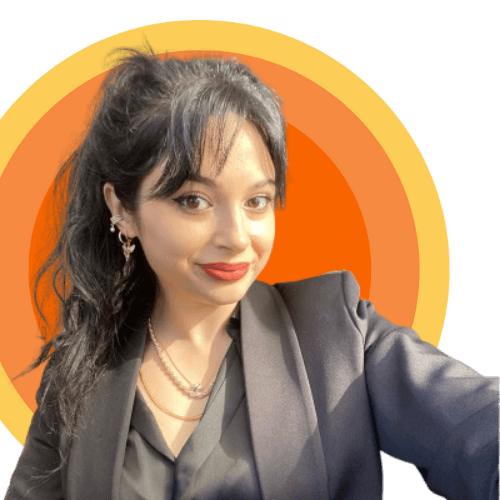
Mısra İlksen Önder, MSc
Clinical Psychologist
MSc Clinical Psychology with honours, Beykoz University; BA Psychology with honours, FMV Işık University. Sixteen advanced CBT modules with Prof. Dr. Hakan Türkçapar. EFT-informed.
How the Process Works
- 1
First Contact
WhatsApp or phoneReach us on WhatsApp or by phone and we agree a day and time that works for you.
- 2
Assessment & Formulation
session 1Your goals, life story and needs are explored in depth, and standardised measures such as the PHQ-9 and GAD-7 establish a baseline.
- 3
Personal Therapy Plan
1 sessionA plan is built around the assessment: the approach, concrete goals and a realistic estimate of how long the work may take.
- 4
Weekly Sessions
50 min · weeklyStructured 50-minute sessions work on thought–feeling–behaviour cycles, with between-session tasks that carry change into your week.
- 5
Progress Review
at intervalsThe same measures are repeated so progress shows up in plain numbers, and the plan is adjusted openly if something is not working.
- 6
Ending & Relapse Prevention
by agreementOnce goals are reached, the process closes with a written relapse-prevention plan rather than an open-ended commitment.
The first step is the hardest part; the rest is planned together. +90 507 336 80 45
Don't Just Feel the Progress — Measure It
On our own digital infrastructure, we run individual therapy measurably too: instead of "we think we're doing better", the distance you cover shows up in numbers.
A Baseline Picture
Therapy starts with standardised clinical scales (PHQ-9, GAD-7), so the map of the problem rests on data, not impressions.
Measured Progress
The same measures are repeated through the process, so the distance you cover shows up in numbers.
Client Portal
Appointments, between-session tasks and measures in one panel; you follow the whole process from your own account.
Matched by Clinical Board
The right psychologist for you is decided by a clinical case board — not by an algorithm.
When Should You Start Individual Therapy?
If worry, low mood or the same recurring patterns are getting in the way of your daily life — or if you simply want to understand yourself better — it is a good time to start. You do not need to wait for a crisis: a process that begins before patterns harden is usually a shorter one. In the first meeting you receive a clear working plan shaped around what you actually need, in person in Şirinyalı or online.
Individual Therapy, Answered
How long does individual therapy take?
It depends on your goals and situation. Many structured CBT processes run between roughly 12 and 20 sessions; some focused difficulties resolve sooner, while long-standing patterns worked on with Schema Therapy can take longer. We give you a realistic estimate at the first assessment and review it openly as you progress.
What happens in the first session?
The first session is a structured assessment. Your psychologist listens to your story, asks about your current difficulties and history, and works with you to define concrete goals. By the end you will have a shared understanding of the problem and a proposed plan — including the approach, likely session rhythm and how progress will be measured.
Should I choose in-person or online sessions?
Both are available and follow the same clinical frame. Research shows video-delivered CBT performs comparably to in-person therapy. Many clients in Antalya combine the two — in person at the Şirinyalı office when convenient, online when travelling or during busy weeks.
Are sessions confidential?
Yes. Everything you share is held in full confidentiality within professional ethics rules and Turkish data protection law (KVKK). Nothing is shared with third parties except in the narrow circumstances required by law, which we explain clearly at the start.
What if I might also need medication?
Psychologists do not prescribe medication. If the assessment suggests medication could help alongside therapy, we can refer you to trusted psychiatrists, including English-speaking options, and coordinate the two strands of care.
Is therapy in English as good as therapy back home?
Founding psychologist Berk Mete trained at Birkbeck, University of London, and is a Graduate Member of the British Psychological Society, so the methods, ethics and session structure follow UK standards. Sessions are conducted natively in English — not translated — and the same evidence-based protocols (CBT, Schema Therapy) used in the UK are used here.
What is the difference between CBT and Schema Therapy?
CBT works on current thoughts, feelings and behaviours with structured, present-focused techniques — highly effective for anxiety, panic and low mood. Schema Therapy goes deeper into long-standing life patterns that formed early on, useful when the same difficulties keep returning. They are often combined in one process; we agree the right emphasis with you at assessment.
Antalya has other psychologists — why choose you?
A fair question. Berk Mete graduated from Birkbeck, University of London and holds Graduate Membership of the British Psychological Society (GMBPsS #763717). Mısra İlksen Önder completed sixteen advanced CBT modules with Prof. Hakan Türkçapar and graduated with honours from two universities. Because they run joint supervision and case discussion, you get a more rounded assessment than a single-therapist setup.
Last updated: September 2026 · Content reviewed by Berk Mete, MSc, GMBPsS

Take the first step — in English
Write to us in English; we usually reply within 24 hours. Meet us at the Şirinyalı office or online — 7 days a week, 09:00-22:00.
More Ways We Can Help
Approach
CBT: Cognitive Behavioural Therapy
The structured, present-focused core of individual work.
Approach
Schema Therapy
For long-standing patterns that follow you across life.
Service
Anxiety Treatment
Evidence-based help for worry, panic and phobias.
Service
Depression Treatment
Structured support for persistent low mood and burnout.
Service
Online Therapy
The same clinical frame, wherever you are.
Service
Couples Therapy
When the knot sits in the relationship, not one person.
Psychologist
Berk Mete, MSc, GMBPsS
Founding clinical psychologist — Birkbeck, University of London.
Psychologist
Mısra İlksen Önder, MSc
Clinical psychologist — advanced CBT training.