

Couples Therapy in Englishso you can truly hear each other again
The Gottman Method and Emotionally Focused Therapy (EFT) for international and bilingual couples: relationship therapy and trust repair after an affair. 7 days a week, 09:00-22:00 — at the Şirinyalı office or online.
Write or call to arrange a first appointment — we usually reply within 24 hours, in English.
5.0
Google rating
49 on Google · 200 published
3,000+
sessions of experience
adults · couples · children
Board
matching by case board
not an algorithm — a clinical board
BPS
Berk Mete — GMBPsS
Birkbeck, Univ. of London · #763717
Which area do you need?
BPS
Berk Mete — Graduate Member
GMBPsS #763717
Experience
3,000+ sessions
Adults · couples · children
Rating
5.0 on Google
49 reviews · 200 published
Response
Within 24 hours
First appointment
The same fight,
a different day.
By the time most couples reach therapy, the problem is no longer any single topic; it is a self-fuelling cyclethat runs regardless of the topic. Gottman's forty years of research names the four steps of that cycle — and each one has a proven antidote.
The first job of couples therapy is not to find who is at fault, but to map this cycle together. Once the cycle is visible, the problem stops being "you" or "me" — it becomes an "it" the two of you can face side by side.
Criticism
“You always do this.”
Defensiveness
“Me? What about you...”
Contempt
sarcasm, eye-rolling, mockery
Stonewalling
going silent, leaving the room
Gottman's "Four Horsemen": the cycle feeds itself — therapy breaks the chain.
Criticism
“You always do this.”
Defensiveness
“Me? What about you...”
Contempt
sarcasm, eye-rolling, mockery
Stonewalling
going silent, leaving the room
... and the cycle loops back to the start. Therapy breaks this chain.
When Is Couples Therapy the Right Step?
Recurring Arguments
The same fight on repeat, arguments that never reach a resolution, and accumulated exhaustion on both sides. The single most common reason couples seek therapy.
After an Affair
Shattered trust, intrusive thoughts, triggers, changes in sleep and appetite, uncertainty about whether to repair the relationship. Worked through with a structured trust-repair protocol.
Communication Breakdown
Not being able to talk, feeling unheard, answering with silence, growing distant.
Intimacy & Desire
Differences in desire, difficulty with closeness, performance anxiety, not being able to talk about intimacy.
Parenting Stress
Different parenting styles, the division of household load, couple time disappearing.
Separation & Divorce
Weighing the decision carefully, explaining it to children, adjusting after separation.
Family Triangles
Friction with in-laws and extended family, boundary crossings — often sharper for cross-cultural couples.
Life Transitions
Pre-marriage doubts, adjusting to a new marriage, relocation abroad, retirement, grief.
If two or more of these feel familiar, reaching out early is the strongest predictor of how well the process goes. In the first meeting we simply listen — no commitment is required.
The Gottman Method, Emotionally Focused Therapy and CBT-Couples
We work with the three approaches that show the largest effect sizes for couple difficulties in meta-analyses. Which method suits you is decided together during the first assessment meetings; where useful, the approaches are blended so they complement each other.
“We keep having the same fight” — we map that cycle together, so it stops running you.
The Gottman Method
Built on John Gottman's forty years of longitudinal research following thousands of couples. It focuses on identifying the destructive communication patterns known as the “Four Horsemen” — criticism, defensiveness, contempt and stonewalling — and repairing each with its proven antidote.
In sessions, the couple's “love maps” are updated, conflict-management skills are practised through concrete exercises, and the sense of shared meaning is strengthened. Structured assessment tools mean you can see where the process stands at every stage.
Who is it for?
Couples stuck in a repeating argument cycle, locked into criticism-and-defence, who want to repair everyday communication.
Session structure
The typical frame is 14-16 sessions; after an assessment phase (joint plus individual meetings), the work proceeds weekly.
“They feel so far away now” — we make the attachment need underneath that feeling visible.
Emotionally Focused Couples Therapy (EFT)
Developed by Sue Johnson, EFT works from attachment theory. It makes visible what sits beneath circular arguments: emotional injuries, protective strategies and attachment needs that are not being met.
The therapist maps the “negative cycle” with the couple; partners learn to reach each other's vulnerable feelings safely. It is the most evidence-supported approach for rebuilding trust after an affair.
Who is it for?
Couples experiencing emotional distance, couples whose cycle is fed by fears of abandonment or inadequacy, and couples repairing after infidelity.
Session structure
The typical process is 8-20 sessions, following a three-stage protocol: de-escalating the cycle, restructuring the bond, consolidation.
“We can't talk without it turning into an argument” — we build concrete communication skills, one exchange at a time.
Cognitive Behavioural Couples Therapy (CBT-Couples)
Focuses on changing the unhelpful thought patterns inside a relationship (“they will never change”, “they do it on purpose”) and the behaviour cycles those thoughts feed. A concrete, skills-based, goal-oriented approach.
Between sessions the couple carries active listening, emotional expression and problem-solving skills into daily life through structured home practice. Progress is reviewed regularly with standardised measures.
Who is it for?
Couples who want concrete communication skills and who work well with structured plans and between-session practice.
Session structure
The typical frame is 12-16 sessions; goals are made concrete in the first meetings and reviewed at regular intervals.
Looking for marriage counselling in English?
From pre-marital counselling to the crossroads of a long marriage, the same evidence-based couples methods apply at every stage — including for couples navigating a marriage across two cultures and two legal systems. Tell us where you are, and we will propose a clear way to start.
Therapy After an Affair: Can Trust Be Rebuilt?
An affair is one of the deepest shocks a relationship can take — yet research shows that with a properly structured process, many couples do rebuild trust. In the Gottman model that repair moves through three phases; no phase is skipped, and neither partner is left to carry it alone.
Atone
The first stone of trust
The partner who strayed takes full responsibility, transparency rules are agreed, and space is made for the hurt partner's shock. Not a blame contest — a structured frame.
Attune
Unwinding the cycle
The dynamics that left the relationship exposed — distance, unmet needs, broken communication — are talked through on ground where both partners feel safe.
Attach
A new agreement
Rather than returning to the old relationship, the couple builds a new and more conscious one: boundaries, rituals and shared future goals are redefined.
What happens in the first session? Not a blame contest — a structure is built: ground rules are agreed so both partners feel safe to speak, and the severity of the shock is assessed with standardised measures. Everything you share stays strictly confidential.
Confidential, Judgement-Free MeetingDon't Just Feel the Progress — Measure It
On our own digital infrastructure, we run couples therapy measurably too: instead of "we think we're doing better", the distance you cover shows up in numbers.
A Baseline Picture
The process starts with standardised relationship-satisfaction and couple-adjustment measures; the map of the problem rests on data, not impressions.
Measured Progress
The same measures are repeated mid-process and at the end, so the distance you have covered shows up in numbers.
Client Portal
Appointments, between-session tasks and measures in one panel; each partner follows the process from their own account.
Matched by Clinical Board
The right couples therapist for you is decided by a clinical case board — not by an algorithm.
Your Couples Therapy Psychologists
Your couples and marriage sessions are held with our founding clinical psychologists, both formally trained in couples methods. The psychologist who fits your situation is decided by the clinical case board.

Berk Mete, MSc, GMBPsS
Clinical Psychologist
MSc Health and Clinical Psychological Sciences, Birkbeck, University of London. BPS Graduate Member #763717. Leads the practice's Gottman-method couples work.
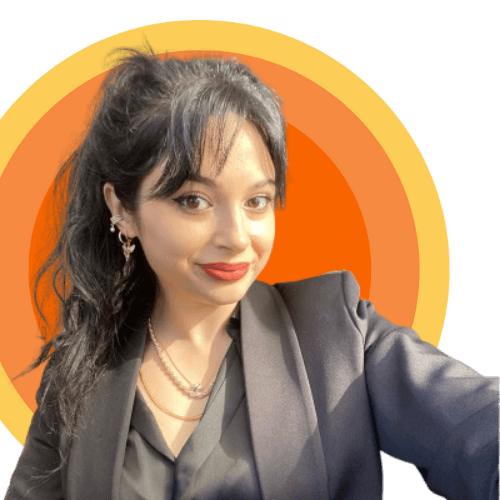
Mısra İlksen Önder, MSc
Clinical Psychologist
MSc Clinical Psychology with honours, Beykoz University; BA Psychology, FMV Işık University. Sixteen advanced CBT modules with Prof. Dr. Hakan Türkçapar. EFT-informed couples work.
The Couples Therapy Process, Step by Step
- 1
Initial Consultation
60 min · both partnersThe history of the relationship, current difficulties and goals are heard; suitability for couples work is assessed.
- 2
Individual Assessments
45 min each partnerEach partner has a separate meeting, so topics that are hard to raise together (infidelity, violence, addiction) can surface safely.
- 3
Feedback & Roadmap
1 sessionThe relationship's strengths and growth areas are shared; goals are made concrete alongside the assessment results.
- 4
Regular Couples Sessions
60-90 min · weeklyGottman, EFT or CBT-Couples is applied; between sessions the couple carries new skills into daily life through home practice. On average 12-20 sessions.
- 5
Consolidation & Ending
planned endingOnce goals are reached, the skills you have learned are consolidated and the work closes with an ending planned together with the couple, so the gains take root in everyday life.
The first step is the hardest part; the rest is planned together. +90 507 336 80 45
Online Couples Therapy: One Session, Even From Two Cities
Shift work, frequent travel or a long-distance relationship is no barrier to couples therapy. In online sessions, partners can join from the same screen — or from two separate devices in two different countries, which many international couples rely on.
- Our own encrypted video platform
- Join from two separate devices, in different cities or time zones
- Research shows results comparable to the in-person format
- Flexible hours until 22:00, 7 days a week
Couples Therapy, or Individual Therapy?
Not everyone with relationship distress needs couples therapy; sometimes the knot sits in one partner's inner world. The comparison below summarises which format fits which situation.
| Topic | Couples Therapy | Individual Therapy |
|---|---|---|
| Focus | The relationship dynamic: the conflict cycle, communication, trust | Your inner world: emotions, history, personal patterns |
| Who attends | Both partners together | One person |
| When it fits | The problem lives in the relationship itself and both partners can attend | Anxiety, low mood, old wounds — or a partner who will not join |
| Session length | 60-90 minutes | Usually 50 minutes |
| Can they run together? | Yes: you can have individual and couples therapy at the same time, with different psychologists; the two processes feed each other. | |
Still unsure which fits? Read more about the one-to-one format: Individual therapy in English →
When Should a Couple Start Therapy?
If your arguments repeat in the same loop, if communication has turned into silence or constant criticism, if trust has been shaken, or if separation is on your mind — it is the right time for couples therapy. There is no need to wait for a crisis: a process that starts before the patterns set in is a shorter one. In the first meeting you receive a clear working plan shaped around what your relationship actually needs.
Couples Therapy, Answered
How does couples therapy in English start in Antalya?
The process begins with an initial consultation that both partners attend together. We hear the story of the relationship from both sides, map the recurring conflicts and agree realistic goals together. The work then continues with weekly sessions using evidence-based methods such as the Gottman Method or Emotionally Focused Therapy (EFT). You can reach us on WhatsApp at +90 507 336 80 45 to arrange the first appointment.
How long is a couples therapy session?
Couples sessions usually run 60-90 minutes — longer than individual therapy, because both partners need space to speak. Sessions are held once a week, a full process is usually planned across 12-20 sessions, and progress is tracked with standardised relationship measures rather than impressions alone.
Do both partners have to attend?
For the couples format to work, yes — both partners attend the joint sessions. Meetings attended by one partner alone are structured differently, as relationship-focused individual therapy. Both partners being willing to engage is one of the strongest factors in how well the process goes.
My partner will not come — can I start alone?
Yes. The process starts as relationship-focused individual sessions: you work on your own responses and your part in the conflict cycle. That change often shifts the overall climate of the relationship and can increase your partner's willingness to join. When your partner is ready, the sessions can be converted into couples therapy.
Is a marriage counsellor the same as a couples therapist?
In everyday use the two describe the same service. What actually matters is not the label but the practitioner: a clinical psychologist with formal training in a couples method such as the Gottman Method or EFT. At Mete Psikoloji, married and unmarried couples are seen with exactly the same evidence-based approaches.
Does couples therapy work after infidelity?
Yes. Structured couples therapy is an evidence-based way of rebuilding trust after an affair. In the Gottman and EFT models, the shock is stabilised first, then communication is repaired and trust is rebuilt step by step. The process usually takes three to six months, depending on the couple.
Will the therapist tell us whether to separate?
No — that decision always belongs to the couple. The therapist's role is to give you the awareness, communication skills and emotional safety to make your own decision well. Some couples decide to repair the relationship; others decide to separate with as little damage as possible, and psychological support is available through that process too.
Can we attend if we are a mixed-nationality couple?
Absolutely. A large part of our couples work is with cross-cultural and bilingual partners living in Antalya. Cultural expectations, extended-family dynamics and living between two languages are exactly the kind of pressures we help couples talk through.
Do you run couples sessions fully in English?
Yes. Sessions are conducted natively in English. The practice's Gottman-method couples work is led by founding psychologist Berk Mete, who trained at Birkbeck, University of London. We also work bilingually — English and Turkish in the same session — so a Turkish-international couple can each speak in the language they think in.
Is online couples therapy as effective as in person?
Research shows online couples therapy delivers results comparable to the in-person format. What matters most is the therapist's competence and the couple's commitment to the process. Mete Psikoloji offers both: in-person sessions at the Şirinyalı (Muratpaşa) office and secure video sessions online.
How does online couples therapy work?
Online couples sessions run on our own encrypted video platform. Partners can join from the same screen or from two separate devices in different cities — useful when one of you travels often. To arrange a first appointment, message us on WhatsApp at +90 507 336 80 45 or start your application on our Get Started page.
Last updated: September 2026 · Content reviewed by Berk Mete, MSc, GMBPsS

Take the first step for your relationship — together
Write to us in English; we usually reply within 24 hours. Meet us at the Şirinyalı office or online — 7 days a week, 09:00-22:00.
More on Couples & Relationship Therapy
Service
Individual Therapy
Start on your own if your partner is not ready yet.
Service
Family Therapy
When the wider family system needs a shared language.
Service
Sexual Therapy
Discreet, clinical support for intimacy difficulties.
Service
Online Therapy
Join the same session from two different cities.
Approach
CBT: Cognitive Behavioural Therapy
The structured approach behind CBT-Couples.
Approach
Schema Therapy
For long-standing patterns that follow you across relationships.
Psychologist
Berk Mete, MSc, GMBPsS
Founding clinical psychologist — leads our Gottman-method work.
Psychologist
Mısra İlksen Önder, MSc
Clinical psychologist — EFT-informed couples and family work.
Service
Child & Adolescent Therapy
Support for children while the couple works on the relationship.